
On this page
SaaS Zoo Shrinking Budget
SaaS Lasso Editorial·
300 Apps and a Shrinking Budget: How to Tame the SaaS Zoo in 2026
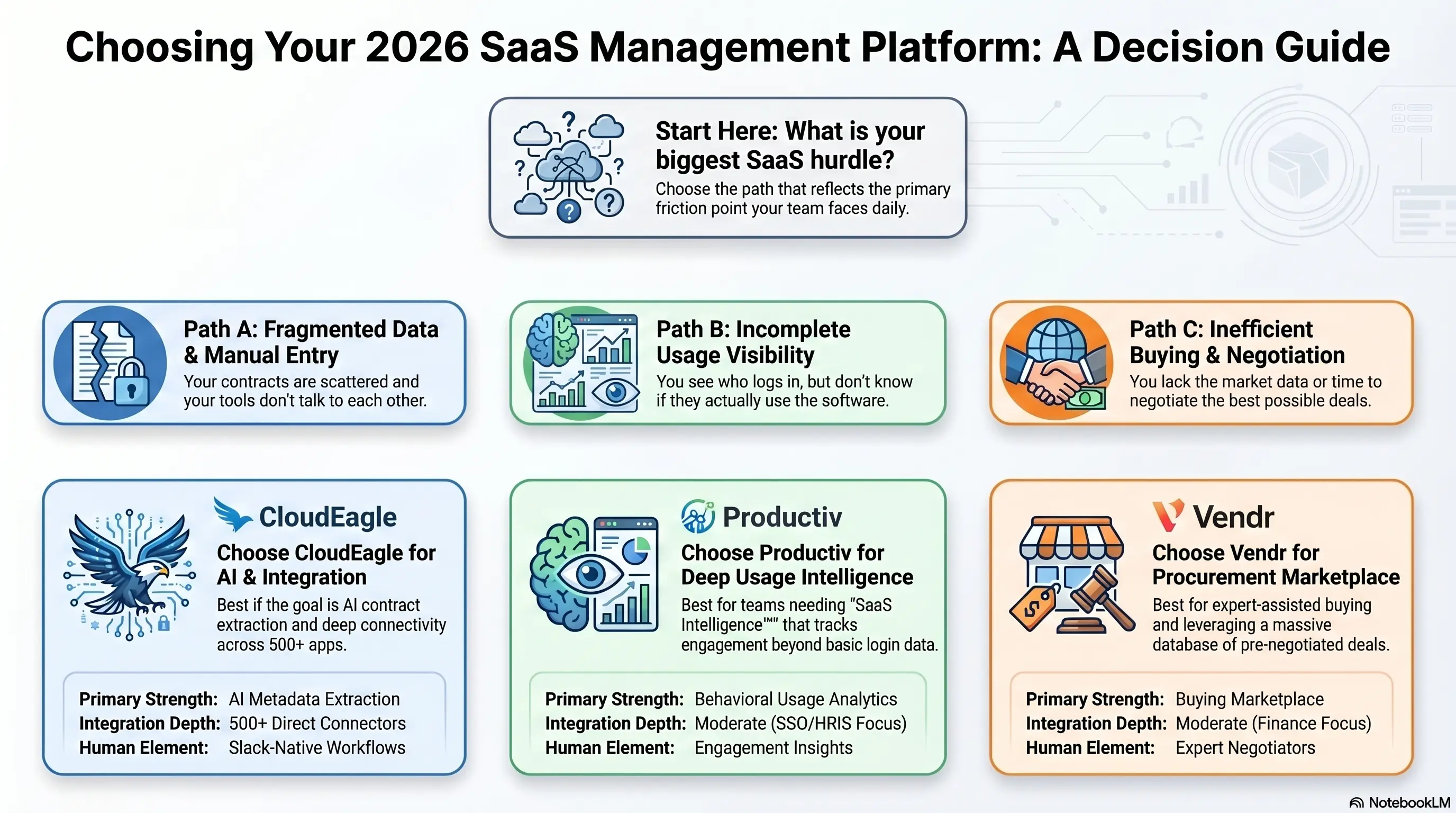
Introduction: The Hook of the High-Cost Zoo
As of 2026, the average enterprise is managing a chaotic "zoo" of over 300 SaaS applications. What began as a movement toward departmental agility has devolved into a primary financial anchor. Software is now officially the third-largest corporate expense, trailing only payroll and real estate.Passive consumption is a 2024 relic; navigating this high-cost environment in 2026 requires aggressive governance. To survive a shrinking budget, leadership must shift from merely "owning" software to active, strategic management. If you are not governing your stack, your stack is governing your margins.
Takeaway 1: The "Spend Management" Revolution vs. Traditional Accounting
Traditional accounting software like QuickBooks Online remains a baseline requirement, but its value is purely retrospective. Ninety percent of QBO disasters trace back to manual DIY setups and misclassified transactions that cost over $5,000 to untangle. In 2026, the "Intelligence Layer" provided by modern spend-management platforms is the only way to achieve real-time cash visibility.Platforms like Ramp and Brex have evolved beyond corporate cards to replace manual bill pay with automated approvals and AI-driven categorization. Crucially, for an organization drowning in 300 apps, Ramp provides the intelligence to identify duplicate subscriptions and wasted licenses before they hit the general ledger."Ninety percent of QuickBooks disasters trace back to business owners who tried to learn it solo, misclassified transactions for six months, and now have a mess... we've seen businesses pay $5,000+ to fix six months of bad categorization."To tame the zoo, you must distinguish between your financial engines:
Ramp: Best for growing SaaS companies that require real-time spend visibility and aggressive elimination of duplicate subscriptions through deep accounting integration.
NetSuite: A non-negotiable for holding companies and multi-entity operators who have outgrown simple workarounds and require native multi-currency and subsidiary consolidation.
Takeaway 2: The Integration "Speed vs. Scale" Trap
Connecting a 300-app zoo requires an Integration Platform as a Service (iPaaS). However, choosing the wrong architecture creates an "analyst bottleneck" that stalls digital transformation. In 2026, the market is split between "gentle slope" implementation and enterprise-heavy service buses.
| Feature | Celigo | Workato | MuleSoft (Anypoint) |
|---|---|---|---|
| Target User | Business Analysts / NetSuite Admins | Business Users & IT Teams | Specialized Developers (Java/XML) |
| Core Strength | NetSuite-centric pre-built flows | AI-powered "Recipes" & Automation | API-led connectivity & ESB |
| Industry Standing | Leader in NetSuite Ecosystem | Q3 2025 Forrester Wave Leader | Enterprise Governance Gold Standard |
| Time-to-Value | Weeks | Days to Weeks | Months |
For teams with shrinking budgets, Celigo offers a "gentle slope" starting at ~ $600/month, utilizing pre-built templates that save weeks of development time. Conversely, MuleSoft acts as a robust enterprise service bus for highly complex, Salesforce-centric landscapes, but it demands a high entry point ($ 5,000--$15,000/month) and significant developer overhead. Unless you have an army of Java developers, MuleSoft is likely a budget-killer.
Takeaway 3: Driving Activation through "Experience-First" Adoption
In 2026, license costs are secondary to the cost of non-adoption. The SaaS zoo is littered with "ghost apps" that users ignore. This has created a philosophical divide in Digital Adoption Platforms (DAPs):
Pendo (Analytics-First): Operates as a system of record for product managers. It excels at measuring granular usage data to inform roadmap decisions.
Appcues (Experience-First): Focuses on behavior change. It is built for growth and marketing teams to ship personalized in-app journeys that drive activation. Empower your growth and marketing teams with low-code flexibility so they can bypass the engineering backlog and launch onboarding flows in hours, not sprint cycles.Strategic Warning: Do not "double-pay" for analytical depth. If your organization already utilizes dedicated tools like Mixpanel or Amplitude, Pendo's bundled analytics are redundant and will likely create data discrepancies between your systems.
Takeaway 4: The "Semantic Layer" Defense Against AI Hallucinations
As AI-powered Business Intelligence (BI) becomes standard, the "semantic layer"---the governed business logic---is what determines accuracy. Without it, your AI is simply an expensive hallucination machine.
Tableau Pulse: The premier choice for proactive metric alerts. It identifies unfavorable trends and notifies users via Slack or Teams. Look for the "certified metrics with green icons" ---this is the visual proof of governance that ensures your marketing team isn't making budget decisions based on ghost data.
Power BI Copilot: The efficiency play for Microsoft-centric organizations. It dominates in DAX formula generation and integrates seamlessly with Excel and SharePoint.
Looker (Core/Gemini): Unlike the basic Looker Studio (used for GA4/Ads reporting), Looker Core provides a sophisticated conversational analytics layer via LookML. This allows non-technical users to query data using natural language without creating a bottleneck for the data team.
Takeaway 5: Securing the Zoo with Unified Endpoint Management (UEM)
A sprawling SaaS stack is a security nightmare. Scalefusion UEM is no longer just a "tool"---it is a strategic prerequisite for 2026 regulatory compliance. If you are in healthcare or finance, securing the physical device is as important as securing the login. **Operational Mandates for 2026: **
Centralized Monitoring: Real-time configuration of Android, iOS, macOS, and Windows from a single pane of glass.
Application Lifecycle Management: Remote "push/update/uninstall" capabilities to ensure no unauthorized SaaS apps are siphoning data.
Kiosk and Rugged Management: Specialized modes to lock down devices for retail or field operations, preventing the zoo from expanding into unauthorized browsing or usage.
Conclusion: The $78 Billion Question
The iPaaS market is projected to reach $78.3 billion by 2032. This is the "integration tax" companies pay for failing to govern their stacks. As budgets shrink, remember that the Total Cost of Ownership (TCO) is rarely found in the license fee; it is hidden in the training overhead, the maintenance headaches, and the data nightmares caused by poor implementation.As you audit your stack for 2026, ask one final question: Is your SaaS stack an asset that powers growth, or a $78 billion maze that hides it?
If this saved you time or helped you make a better buying decision, you can support the work.
Support the WorkNo PayPal account needed.